Dovedale AirBridge™ | Subfloor Ventilation for Timber Floors
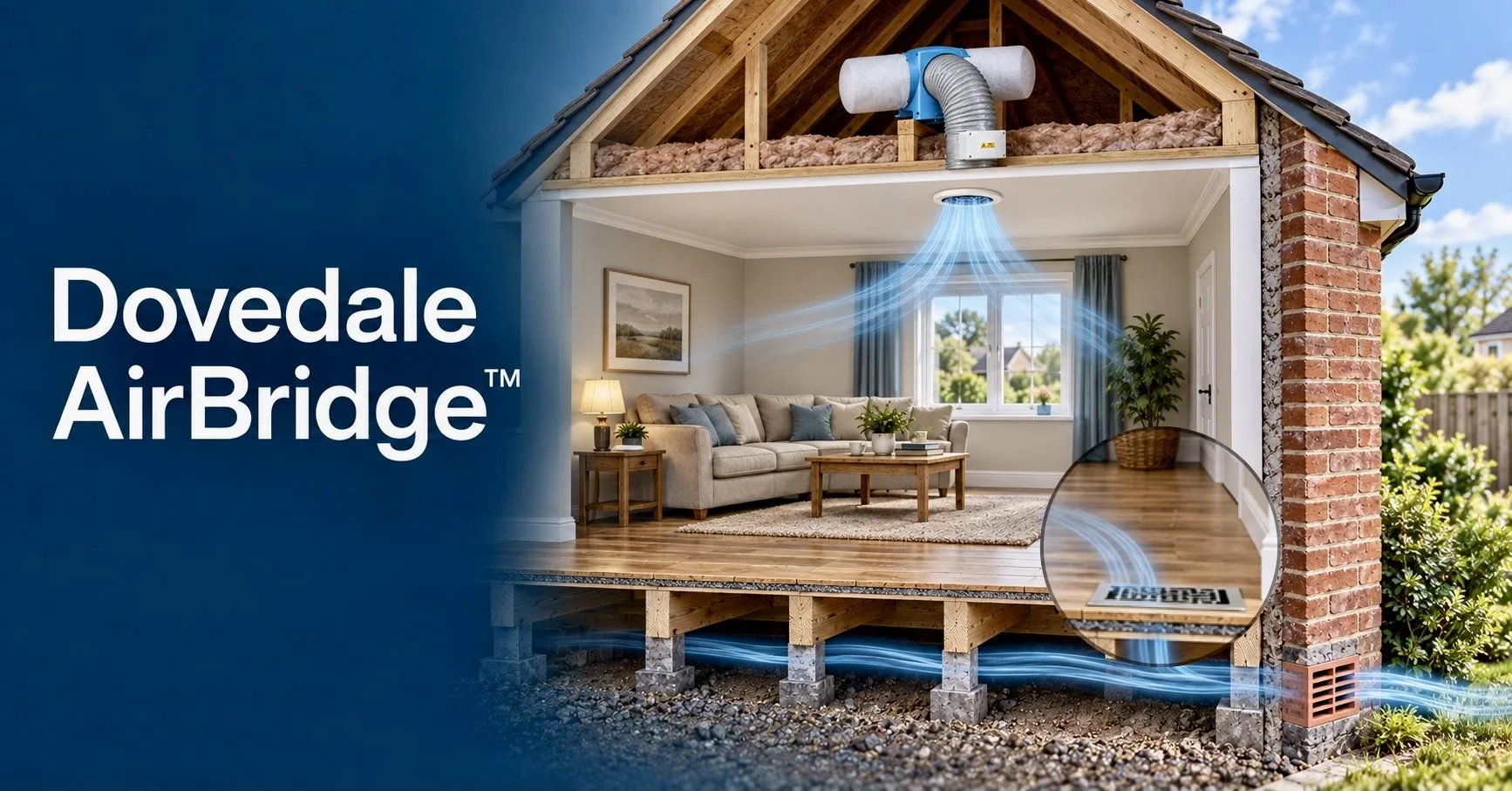
The Dovedale AirBridge™: A New Approach to Ventilating Suspended Timber Floors
Hidden beneath many older homes is a part of the building that is easily forgotten: the subfloor void.
This space beneath a suspended timber floor should be kept supplied with moving air through correctly positioned external airbricks. When ventilation becomes restricted, moisture can accumulate around floorboards, joists and other structural timbers. Given enough time, these conditions may contribute to musty odours, fungal growth and timber decay.
The Dovedale AirBridge™ has been developed to help improve airflow within vulnerable subfloor spaces by connecting them to the controlled ventilation already taking place inside the home.
What is the Dovedale AirBridge™?
The Dovedale AirBridge™ is a discreet, purpose-positioned floor ventilation point installed through a suspended timber floor.
It creates a controlled air pathway between the room and the void beneath it. Where the property is fitted with positive input ventilation—commonly known as PIV—the gently introduced fresh air can pass through the AirBridge™ and into the subfloor space.
This helps replace stagnant, moisture-laden air beneath the floor and encourages it to leave through the property’s existing or newly installed external airbricks.
In simple terms, the system helps fresh air travel:
Into the property through the PIV unit → through the Dovedale AirBridge™ → across the subfloor void → out through the external airbricks.
Rather than leaving the subfloor isolated, the AirBridge™ allows it to benefit from the wider ventilation strategy within the building.
Why do suspended timber floors need ventilation?
Timber lasts remarkably well when it is kept reasonably dry and adequately ventilated. Problems can begin when moisture is allowed to remain around the timber for prolonged periods.
Subfloor ventilation may be reduced by:
Blocked, damaged or painted-over airbricks
External ground levels covering the original vents
Extensions, conservatories or alterations interrupting airflow
Internal walls dividing the subfloor into poorly ventilated sections
Debris obstructing the void
An insufficient number of airbricks
Modern floor coverings restricting natural air movement
Leaks or other sources of moisture beneath the floor
A lack of airflow does not automatically mean that decay is present. However, persistently humid and stagnant conditions increase the risk of wet rot and other moisture-related timber defects.
Typical warning signs may include musty or mushroom-like odours, movement or deflection in the floor, localised dampness, deteriorating boards, fungal growth or unusually high humidity readings beneath the floor.
How does the AirBridge™ work with PIV?
A positive input ventilation system introduces a continuous supply of filtered air into the home, usually from a unit situated within the loft.
This creates gentle positive air pressure, helping to dilute indoor humidity and move stale air towards natural leakage points. PIV is most commonly recommended to help manage condensation, black mould and generally poor air quality.
When a Dovedale AirBridge™ is incorporated into the design, a proportion of this fresh air can also be directed into the subfloor void. The AirBridge™ therefore extends the benefit of the ventilation system into an area that conventional room ventilation may not otherwise reach.
The objective is not simply to create an opening in the floor. Its position, the arrangement of the subfloor, the location of the external airbricks and the direction in which air is likely to travel all need to be considered.
When might an AirBridge™ be recommended?
A Dovedale AirBridge™ may be considered where an inspection identifies:
High relative humidity within a subfloor void
Stagnant air or persistent musty odours
Inadequate cross-ventilation beneath a suspended timber floor
Localised areas that are difficult to ventilate using external airbricks alone
A subfloor divided by internal walls or later alterations
Previous or current moisture-related timber decay
A property already benefiting from, or suitable for, a PIV system
One or more AirBridge™ points may be recommended, depending upon the construction and layout of the property.
Every building is different, so their suitability and positioning should always be determined following an inspection.
A discreet addition to the room
The visible part of the AirBridge™ is a neat floor register positioned with both performance and appearance in mind.
Where practical, it may be installed in an unobtrusive area of the room, such as close to a wall or within the natural layout of the space. The precise location must also allow air to reach the part of the subfloor where improved ventilation is required.
The aim is to provide meaningful airflow without creating an intrusive feature within the room.
Is the AirBridge™ a cure for timber decay?
No ventilation product should be presented as a universal cure.
If floorboards or joists have already been significantly affected by wet rot or another form of timber decay, the defective timber may need to be removed and replaced. Any plumbing leak, penetrating water, raised ground level or other direct moisture source must also be identified and corrected.
The Dovedale AirBridge™ is principally a ventilation and risk-reduction measure. It may form part of a wider programme that includes:
Repairing or replacing decayed timber
Removing debris from beneath the floor
Treating retained timbers where appropriate
Installing or reopening external airbricks
Improving cross-ventilation
Correcting plumbing or drainage defects
Installing whole-home PIV
Improving bathroom and kitchen extraction
The best results are achieved when the source of moisture and the airflow limitations are addressed together.
Why inspection matters
A subfloor problem cannot always be diagnosed accurately from the room above.
Where access is available, Dovedale can inspect the void directly. In especially shallow or restricted areas, cameras or specialist inspection equipment may be used to examine otherwise inaccessible parts of the floor.
Humidity readings taken beneath the floor can also be compared with conditions inside the room. This helps establish whether the void is retaining significantly more moisture and whether additional ventilation is likely to be beneficial.
Our recommendations are based upon the construction and condition of the individual property—not simply on the presence of a damp reading or musty smell.
A joined-up approach to moisture control
Older properties often require a balance between traditional construction and modern living.
Heating patterns, sealed windows, fitted floor coverings, indoor clothes drying and reduced natural ventilation can all change how moisture behaves within a building. Treating one visible symptom without considering the rest of the property may produce only a temporary improvement.
The Dovedale AirBridge™ forms part of a joined-up approach: improving airflow above and below the floor, reducing stagnant pockets and helping the building manage moisture more effectively.
Concerned about the space beneath your floor?
If you have noticed a musty smell, movement in the floor, visible fungal growth or recurring dampness around a suspended timber floor, Dovedale can investigate the condition of the subfloor and advise whether an AirBridge™ ventilation strategy may be suitable.
Where appropriate, we can combine the Dovedale AirBridge™ with improvements to external subfloor ventilation and a whole-home PIV system.
Contact Dovedale Dampcure Services Ltd to arrange an inspection and receive recommendations tailored to your property.