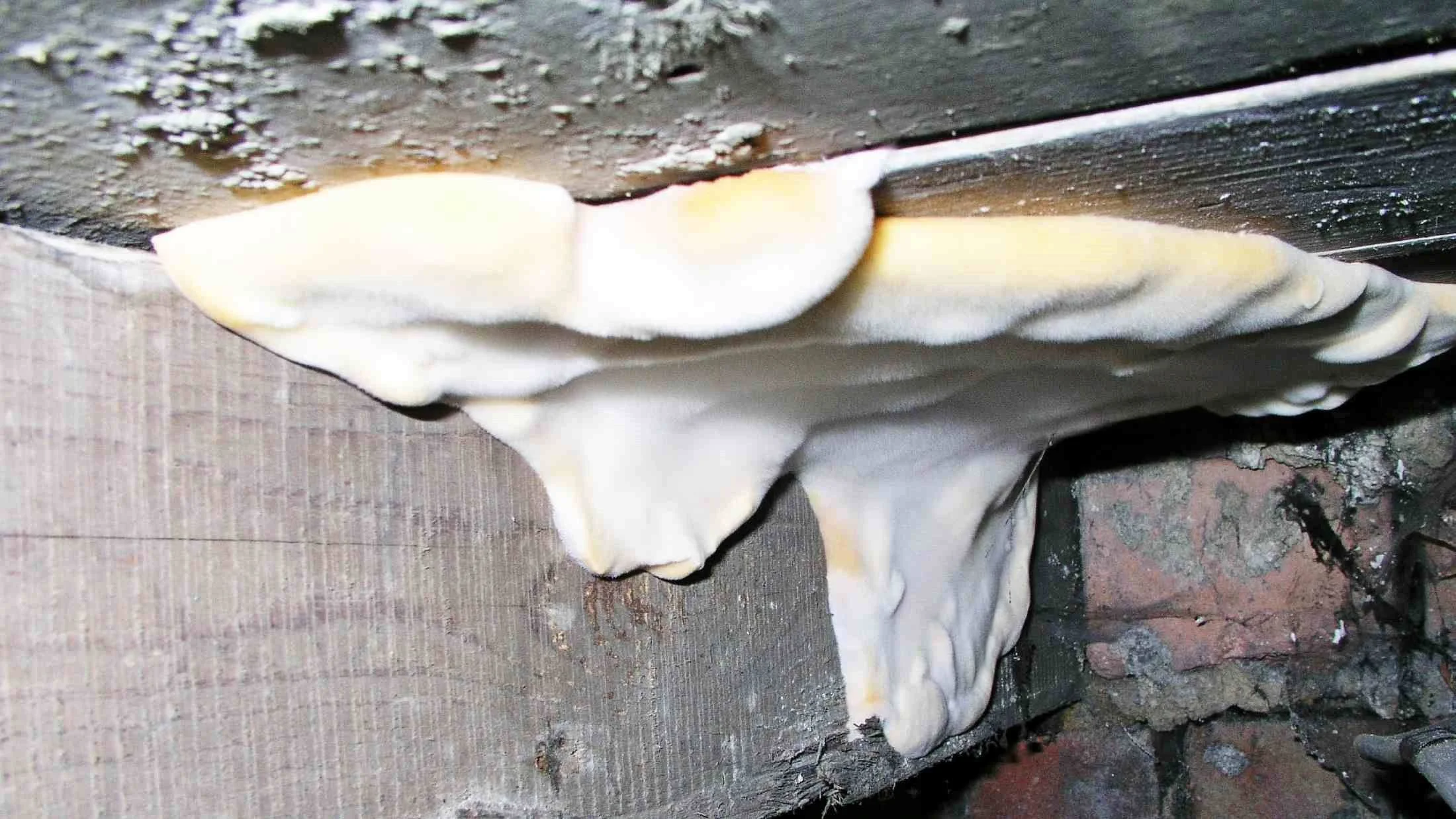


Black Mould in the Spotlight – Why Every Homeowner and Landlord Should Take Notice
Here at Dovedale Dampcure Services Ltd, we inspect properties across Hull and East Yorkshire every week, and sadly, black mould is one of the most common problems we encounter. It’s something that affects homeowners, tenants and landlords alike, and in many cases it has been developing for months—or even years—before anyone seeks professional advice.
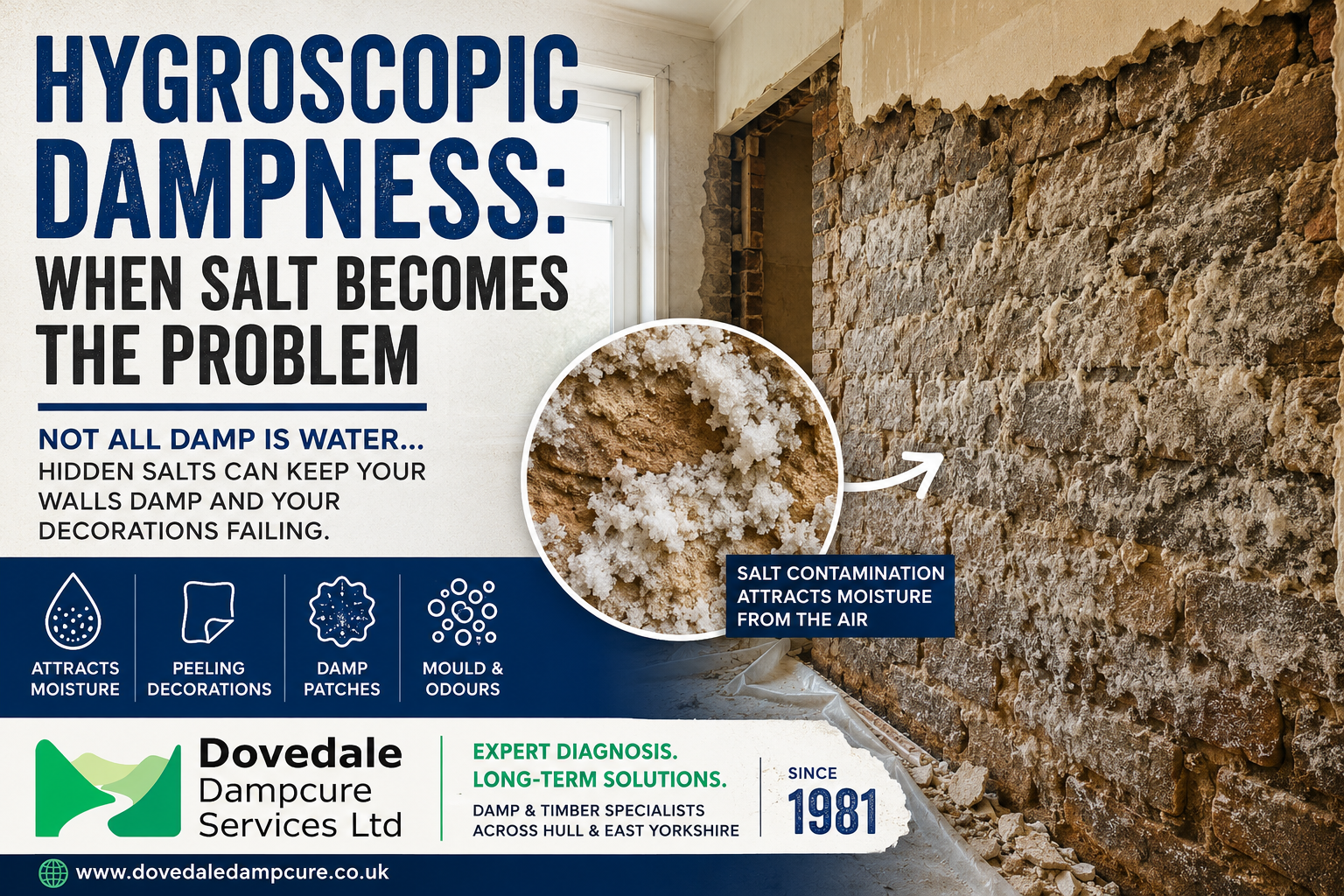

This Damp Problem FOOLS Everyone | Hygroscopic Damp Explained (Market Weighton)
In this video, we inspect a property in Market Weighton affected by widespread hygroscopic dampness across the ground floor.
Following investigation, all contaminated plaster was removed back to the original brickwork to eliminate hygroscopic salts. These salts attract moisture from the air, often leading to persistent high moisture readings despite no active water ingress.
The property has been prepared for reinstatement using a specialist renovating plaster system, with selected areas treated using Isotherm to improve surface temperatures and reduce condensation risk.
This case highlights the importance of correctly identifying hygroscopic dampness and distinguishing it from rising or penetrating damp before specifying remedial works.
If you’re dealing with persistent damp readings or recurring issues, accurate diagnosis is key.